How Network Cabling Impacts Productivity in Commercial Spaces
In today’s fast-paced commercial environments, technology is central to daily operations. From cloud-based software to video conferencing and IoT devices, businesses rely heavily on stable and high-speed connections. At the heart of these connections is network cabling, the backbone infrastructure that enables seamless communication and data flow. Poor or outdated cabling can lead to slow networks, system crashes, and frustrated employees, all of which directly affect productivity. Investing in modern network cabling is not just a technical upgrade—it’s a strategic business decision.
The Role of Network Cabling in Commercial Spaces
Network cabling serves as the physical infrastructure that connects devices across an office or commercial building. While Wi-Fi is often highlighted as a productivity tool, wired connections through structured cabling provide unmatched speed, stability, and reliability. In commercial spaces, employees depend on fast and uninterrupted connections for accessing databases, transferring files, participating in video conferences, and running business-critical applications. Well-designed network cabling reduces downtime and eliminates the bottlenecks that can slow workflows.
Modern commercial offices often have a variety of devices—desktops, VoIP phones, printers, security systems, and smart building devices. By ensuring that each system receives sufficient bandwidth, businesses prevent delays that would otherwise disrupt daily operations.

Commercial Network Cabling Site
How Poor Cabling Affects Employee Productivity
Outdated or poorly installed network cabling can create a ripple effect of problems throughout a commercial space. Slow data transfer, intermittent connectivity, and frequent network outages waste valuable employee time. According to industry research, network issues account for a significant portion of lost productivity in offices.
When employees experience delays caused by subpar network cabling, they may struggle to access critical files, communicate with colleagues, or participate in virtual meetings. Over time, these interruptions not only reduce output but can also lower morale, as staff become frustrated with the technology they depend on. Investing in quality network cabling mitigates these risks and fosters a more efficient work environment.
Structured Cabling: The Key to Efficiency
Structured network cabling organizes and standardizes the physical connections within a commercial property. Unlike patchy cabling systems, structured cabling ensures that every connection point is mapped, labeled, and optimized for performance.
This approach provides several productivity benefits:
-
Reduced Downtime: Maintenance and troubleshooting become faster because technicians can quickly identify and resolve issues.
-
Scalability: Businesses can easily expand or reconfigure office layouts without disrupting network performance.
-
Consistency: Every device receives reliable connectivity, reducing interruptions and supporting smooth workflows.
A well-planned structured cabling system is crucial for businesses that rely on multiple applications and devices simultaneously.
Supporting Modern Business Technologies
Commercial spaces today integrate various advanced technologies, including cloud computing, VoIP communications, and IoT-enabled building systems. All of these require a reliable and high-capacity network cabling backbone to operate efficiently.
For instance, video conferencing has become a standard mode of communication in offices. Lag or interruptions caused by inadequate cabling can lead to miscommunications and wasted time. Similarly, cloud-based project management and storage systems depend on consistent network performance. By upgrading+, businesses can ensure employees access these tools seamlessly, ultimately boosting productivity and operational efficiency.
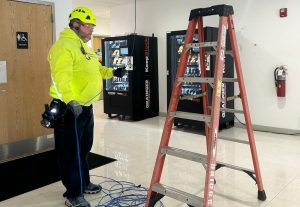
Cabling Tech at a Commercial Property
Cost Savings and Return on Investment
Investing in high-quality structured cabling may seem like an upfront expense, but the long-term benefits often outweigh the cost. Reduced downtime, faster troubleshooting, and improved employee productivity translate directly into financial gains for the business.
Commercial spaces with outdated cabling may experience frequent network failures, requiring repeated IT interventions and lost work hours. By contrast, modern cabling reduces maintenance needs and allows IT teams to focus on strategic initiatives rather than reactive fixes.
Future-Proofing Your Commercial Space
Technology evolves rapidly. Commercial spaces today need to plan for higher bandwidth requirements, IoT integration, and increased device density. Forward-thinking businesses prioritize network cabling that supports current needs while remaining adaptable for future upgrades.
By future-proofing network infrastructure, companies avoid the disruption and costs associated with frequent cabling replacements. Modern, scalable cabling ensures that productivity remains high even as new technologies are adopted, keeping commercial spaces competitive and efficient.
Conclusion
In commercial spaces, productivity is closely tied to reliable technology, and network cabling is the foundation of that reliability. From preventing downtime to supporting modern applications and devices, high-quality cabling ensures that employees can work efficiently and without frustration.
Investing in structured and modern cabling is not just a technical improvement—it is a strategic move that enhances operational efficiency, reduces costs, and future-proofs commercial properties for technological growth. Businesses that prioritize robust cabling infrastructure set themselves up for long-term productivity and success.
For help with any project or installation in the New Jersey or Philadelphia area please call us at 877-832-1206.
For more ideas please visit – https://www.bridgecable.com/services/
For more information and educational content please visit:
https://www.youtube.com/@BridgeCable
Copyright © 2025 Bridge Cable. All rights reserved.
Mailing: 2745 Terwood Road, Willow Grove, PA 19090
Warehouse: 2066 W. Hunting Park Ave, STE 308, Philadelphia, PA 19140
Related Posts
What to Expect During Commercial Cabling Projects

Top 10 Network Cabling Trends to Watch in 2026

