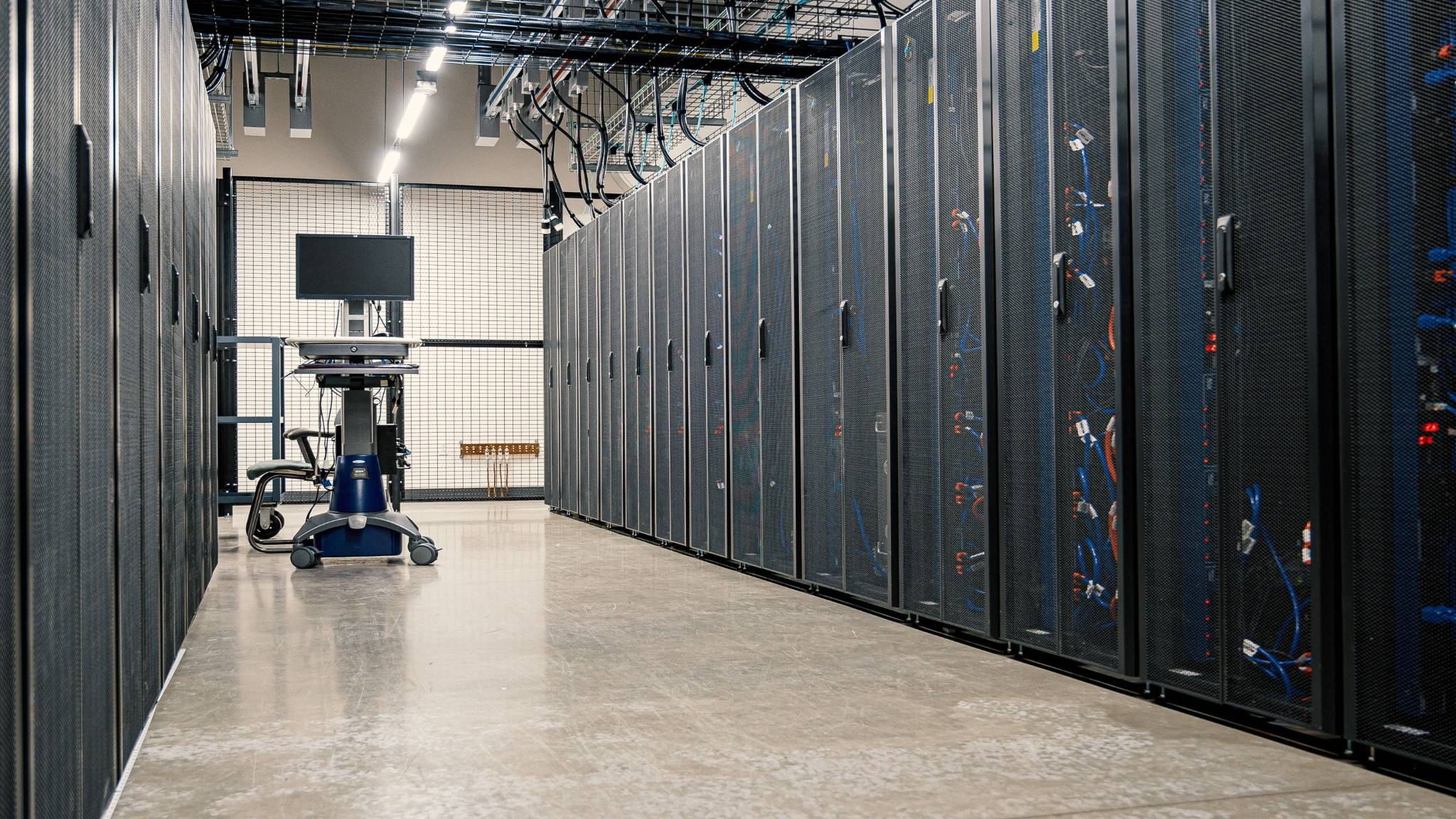
Mass Production Makes Single Mode Fiber More Affordable
For many years, multimode fiber was considered the budget-friendly option for network installations. However, changes in manufacturing, increased global demand, and advancements in fiber technology have shifted the market. Today, single mode fiber is often priced competitively with multimode fiber and, in some cases, may even offer a better overall value.
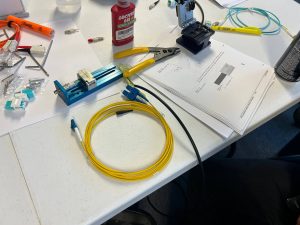
A Bridge Cable technician prepares and terminates single mode fiber connectors using precision fiber optic tools to ensure reliable, high-performance network connectivity.
The biggest factor behind this change is mass production. Telecommunications providers, cloud service companies, internet carriers, and hyperscale data centers have dramatically increased their use of single mode fiber over the past decade. As demand has grown, manufacturers have expanded production capacity and improved efficiencies, reducing the overall cost of the cable.
Unlike multimode fiber, which is typically used for shorter-distance applications, single mode fiber supports much longer transmission distances and higher bandwidth capabilities. Because it has become the preferred standard for large-scale network deployments, manufacturers now produce significantly more of it than ever before. These higher production volumes have helped lower costs across the industry.
In addition to lower cable costs, the price gap between the components used with single mode and multimode fiber has also narrowed. Historically, network optics and transceivers designed for single mode applications were significantly more expensive, making multimode the preferred choice for budget-conscious projects. However, continued advances in networking technology and increased adoption across enterprise and data center environments have driven down the cost of these components. As a result, organizations evaluating new fiber installations can often implement single mode infrastructure with a much smaller upfront cost difference than in previous years while gaining substantially greater flexibility for future network growth.
For businesses planning network upgrades, single mode fiber offers a future-ready solution. Organizations can deploy infrastructure capable of supporting growing bandwidth requirements without worrying about replacing cable as technology advances. This long-term scalability often provides a lower total cost of ownership compared to multimode alternatives.

A Bridge Cable technician performs fiber optic testing to verify signal strength, minimize loss, and ensure optimal network performance before system deployment.
At Bridge Cable, the increased affordability of single mode fiber has created significant benefits for both our customers and our installation teams. Lower material costs allow us to provide more competitive project pricing while still delivering high-quality fiber optic solutions. Clients who may have previously chosen multimode fiber due to budget concerns can now consider single mode options that offer greater performance and longevity.
The widespread availability of single mode fiber also helps Bridge Cable streamline project planning and procurement. With more manufacturers producing the cable and related components, lead times are often more predictable, helping projects stay on schedule and reducing potential delays.
As businesses continue investing in cloud services, AI technologies, video applications, and high-speed connectivity, the demand for robust network infrastructure will only increase. Single mode fiber provides the bandwidth, distance, and scalability required to support these modern applications while remaining cost-effective.

A Bridge Cable technician performs precision fiber optic fusion splicing to create a low-loss, high-performance connection for a commercial network installation.
The shift toward mass production has transformed the economics of fiber optic networking. What was once considered a premium solution is now becoming the standard choice for organizations seeking long-term value. For Bridge Cable customers, single mode fiber delivers the ideal combination of affordability, performance, and future-proof reliability.
Whether you’re building a new network, upgrading an existing facility, or expanding connectivity between locations, Bridge Cable can help you evaluate the best fiber solution for your needs and maximize the advantages that modern single mode fiber technology provides.
For help with any project or installation in the New Jersey or Philadelphia area please call us at 877-832-1206.
For more ideas please visit – https://www.bridgecable.com/services/
For more information and educational content please visit:
https://www.youtube.com/@BridgeCable
Copyright © 2026 Bridge Cable. All rights reserved.
Mailing: 2745 Terwood Road, Willow Grove, PA 19090
Warehouse: 2066 W. Hunting Park Ave, STE 308, Philadelphia, PA 19140
Related Posts

Fiber Optic Contractor: Why They Are Becoming the Standard in Pennsylvania
Fiber Optic Contractor Demand Soars This July