What to Expect During Commercial Cabling Projects
Upgrading or installing a commercial network requires careful planning, coordination, and expertise. For businesses, understanding what to expect during projects can reduce downtime, improve efficiency, and ensure a successful outcome. Commercial cabling projects involve multiple stages, from initial assessment and design to installation, testing, and ongoing maintenance. Knowing the process helps organizations prepare, set realistic timelines, and coordinate resources effectively.
Initial Assessment and Planning
Every successful commercial cabling project begins with a thorough assessment. Technicians evaluate the building layout, existing cabling, and network requirements to develop a clear plan. During this stage, projects typically include reviewing floor plans, identifying high-traffic areas, and determining optimal cable routes. The assessment also considers power sources, potential obstacles, and future expansion needs. Detailed planning ensures that the installation will support current and long-term business operations.
Designing the Network Infrastructure
Once the assessment is complete, the design phase begins. During commercial cabling projects, schematics are created that outline cable types, pathways, patch panels, and equipment placement. This phase ensures compliance with industry standards and building codes. Proper design also accounts for scalability, enabling businesses to expand their network without major overhauls. By planning in detail, commercial cabling projects reduce the risk of costly mistakes during installation.
Selecting the Right Cabling
Choosing the appropriate cabling is a critical step in commercial cabling projects. Fiber optic, Cat6, Cat6a, and Cat7 are common choices, each offering different speeds, bandwidth, and distance capabilities. The decision depends on business requirements, building layout, and anticipated future upgrades. Selecting the right cables ensures the network performs reliably, supports high-speed applications, and remains adaptable for future technology trends.

Commercial Cabling Projects Job Sites
Preparing the Site
Before installation begins, preparation is key. For commercial cabling projects, this often involves clearing pathways, labeling existing infrastructure, and ensuring safety protocols are in place. Technicians may need to coordinate with other contractors, especially in office buildings or industrial facilities. Proper site preparation minimizes disruptions and creates a safe environment for installation teams to work efficiently.
Installation Phase
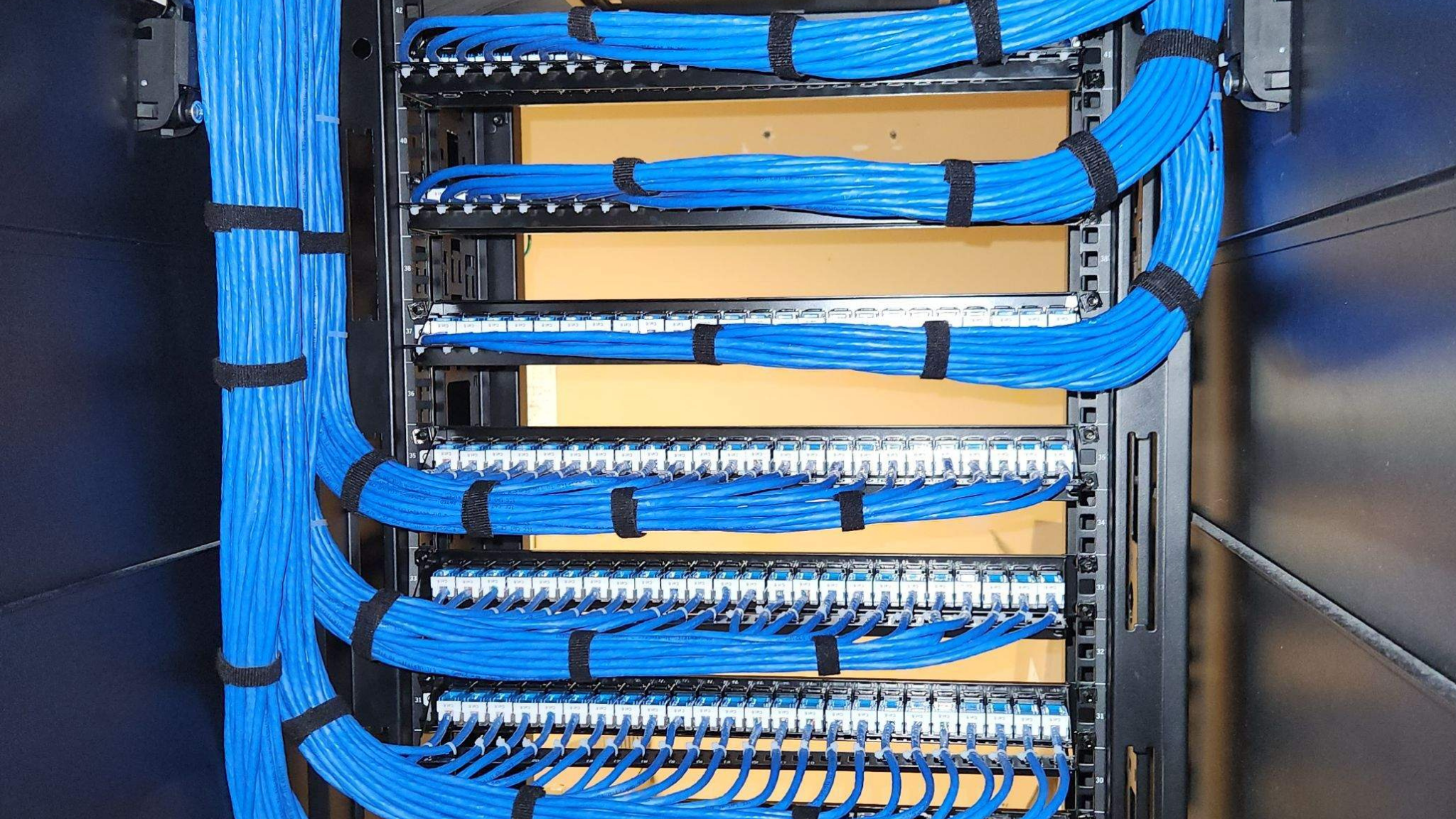
The installation phase is where the physical cabling is deployed. During commercial cabling projects, this includes running cables through walls, ceilings, or raised floors, installing patch panels, and terminating connections at network ports. Experienced technicians follow strict standards to maintain signal integrity and organization. Throughout the process, careful attention to detail ensures that the cabling is neat, accessible, and easy to manage for future upgrades or troubleshooting.
Testing and Certification
After installation, testing and certification are essential. Commercial cabling projects require verifying connectivity, measuring signal quality, and ensuring compliance with performance standards. This step identifies any issues, such as crosstalk or interference, and allows technicians to make adjustments before the network goes live. Proper testing ensures the network operates reliably, supports high-speed applications, and meets business requirements.
Minimizing Disruptions
One of the biggest concerns for businesses during commercial cabling projects is minimizing disruptions to daily operations. Experienced installers plan work during off-hours, weekends, or in phases to reduce downtime. Clear communication with staff about schedules, expected interruptions, and safety protocols is essential. Proper planning helps organizations maintain productivity while the new network infrastructure is being deployed.
Documentation and Labeling
Documentation is a crucial part of commercial cabling projects. Technicians label cables, ports, and panels and provide detailed maps of the network layout. Accurate documentation makes future troubleshooting, maintenance, and upgrades faster and easier. Businesses benefit from organized records that provide insight into network performance, cabling pathways, and connections across the facility.

One of Bridge Cable’s Commercial Cabling Projects
Training and Handover
Once the installation is complete, businesses often receive training on managing the network infrastructure. For commercial cabling projects, this can include guidance on monitoring performance, maintaining cable organization, and troubleshooting common issues. A proper handover ensures that IT staff or facility managers are equipped to handle minor issues and understand the layout and capabilities of the new network.
Maintenance and Upgrades
Even after completion, commercial cabling projects include recommendations for ongoing maintenance. Regular inspections, cleaning, and performance testing help prevent issues and extend the lifespan of the network. Additionally, infrastructure should be scalable to accommodate future technology upgrades, ensuring the network continues to support business growth efficiently.
Choosing the Right Partner
The success of commercial cabling projects depends largely on the experience and professionalism of the installation team. Businesses should work with certified providers who follow industry standards, provide clear timelines, and maintain strong communication. Partnering with a reliable team ensures projects are completed on time, within budget, and with minimal disruption to operations.
Commercial cabling projects are complex but essential for businesses looking to upgrade, expand, or future-proof their networks. From initial assessment and design to installation, testing, and ongoing maintenance, each step requires careful planning and skilled execution. Understanding the process helps organizations prepare, reduce downtime, and maximize the performance of their network infrastructure.
By working with experienced professionals and following industry best practices, businesses can ensure that commercial cabling projects deliver reliable, high-speed, and scalable networks that meet current needs and support future growth. Investing in proper network infrastructure sets the foundation for efficiency, security, and long-term success.
For help with any project or installation in the New Jersey or Philadelphia area please call us at 877-832-1206.
For more ideas please visit – https://www.bridgecable.com/services/
For more information and educational content please visit:
https://www.youtube.com/@BridgeCable
Copyright © 2026 Bridge Cable. All rights reserved.
Mailing: 2745 Terwood Road, Willow Grove, PA 19090
Warehouse: 2066 W. Hunting Park Ave, STE 308, Philadelphia, PA 19140
Related Posts

Top 10 Network Cabling Trends to Watch in 2026

New Year, New Possibilities: Network Cabling Upgrades That Pay Off in 2026