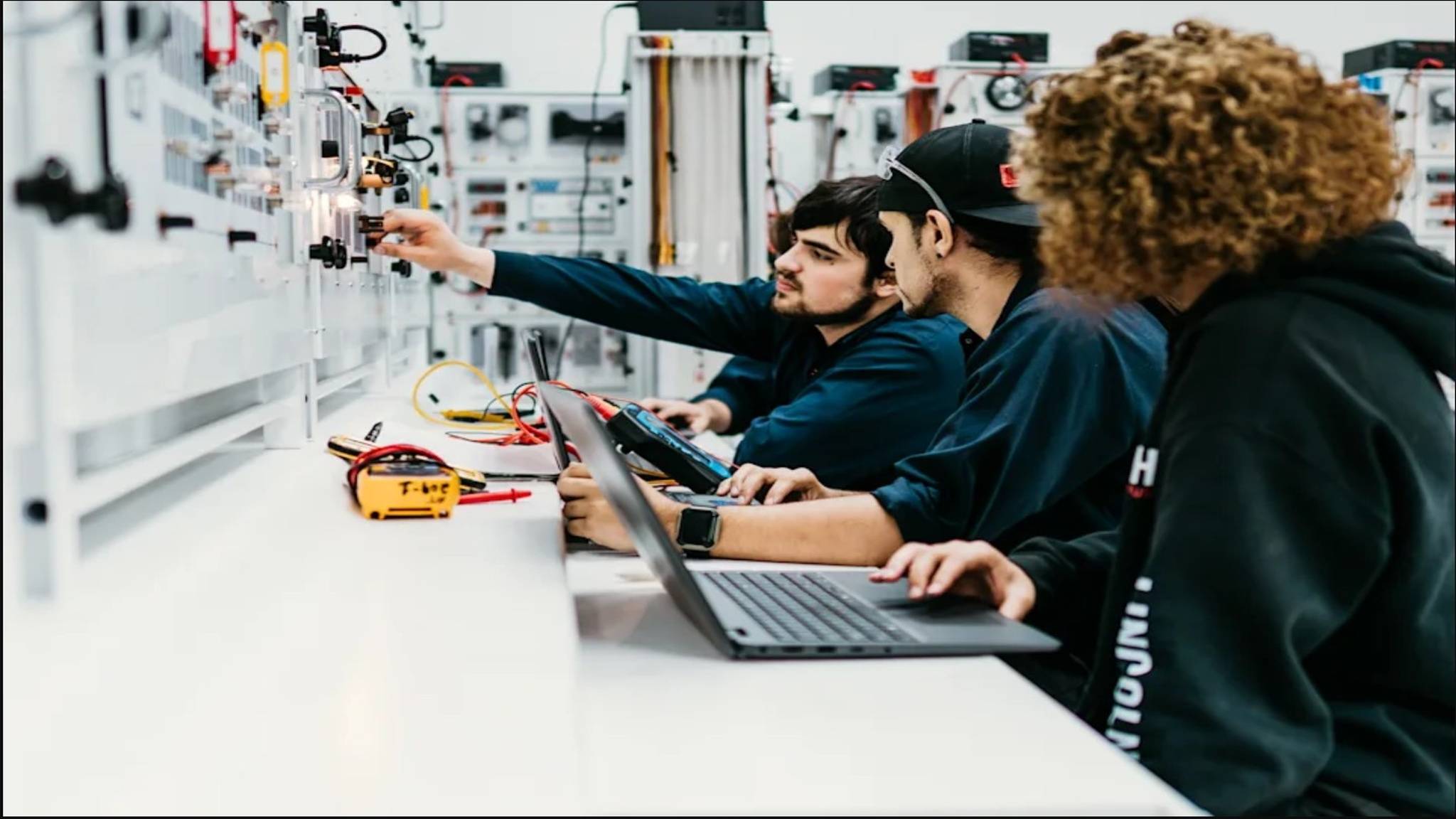
How Weather Extremes Affect Your Security Surveillance
Extreme weather is arriving more often and hitting harder, and that has direct consequences for the equipment guarding your home or business. Whether you’re bracing for a scorching summer heatwave or a punishing winter snowstorm, your security surveillance system faces conditions it may not have been designed to withstand. Cameras, cabling, power supplies, and network gear all have physical limits.
Knowing how temperature extremes affect performance helps you prepare in advance, avoid costly blind spots, and keep footage reliable exactly when you’re most likely to need it.
How Heatwaves Strain Your Security Surveillance
When temperatures climb, electronics suffer. Most cameras carry an operating range printed in their specs, and prolonged exposure above it can push a device into thermal shutdown or permanent damage. Direct sunlight makes it worse: a camera mounted on a south-facing wall can reach internal temperatures far higher than the ambient reading on your phone.
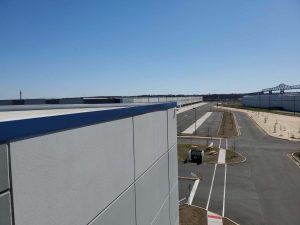
An elevated view of a large commercial warehouse and its empty lot, the kind of expansive perimeter that outdoor security surveillance is built to cover in all weather.
Heat affects your security surveillance in several ways. Image sensors generate more digital noise as they warm, producing grainy, washed-out footage that undermines the whole point of recording. Infrared night vision, which relies on LEDs that already run hot, can dim or fail entirely. Lithium batteries in wireless cameras degrade faster and may swell or leak in extreme heat.
Beyond the cameras, the supporting hardware is vulnerable too. Network video recorders and hard drives stored in hot garages, attics, or unventilated closets are prone to overheating and data loss. Even the humble PoE switch can throttle or fail. Dust from dry, windy heatwaves compounds the problem by clogging vents and lenses. Left unchecked, a heatwave can quietly disable your security surveillance right when property crime tends to rise.
How Snowstorms and Cold Threaten Security Surveillance
Cold weather brings a different set of challenges. Battery capacity drops sharply in freezing temperatures, so wireless and solar cameras may die hours earlier than expected during a storm. Lubricants and moving parts in pan-tilt-zoom cameras stiffen, slowing or freezing their movement.
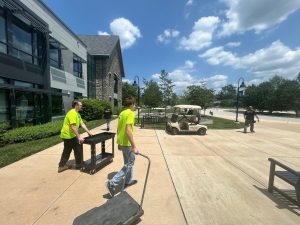
A field team moves equipment carts across a commercial campus during an on-site security surveillance installation on a clear summer day.
Snowstorms attack your security surveillance physically as well as electronically. Snow and ice accumulate on lenses and housings, blocking the view completely until someone clears them. Meltwater that refreezes can crack seals and let moisture seep into the electronics, causing corrosion and short circuits. Condensation is a constant threat: when a cold camera warms up, fog forms on the inside of the lens and blurs everything.
Wind-driven snow can knock cameras out of alignment, leaving you covering the wrong area without realizing it. Power outages are far more common during winter storms, and if your recorder lacks a battery backup, you lose footage during the exact window when break-ins and vandalism tend to spike. Wi-Fi signals also weaken as they pass through wet, heavy snow, so cloud-based systems may drop their connection right when reliability matters most.
Protecting Your Security Surveillance in Any Season
The good news is that a few practical steps go a long way. Start by choosing cameras with a wide operating temperature range and a strong ingress protection (IP) rating—IP66 or higher is a sensible baseline for outdoor use. Weatherproof housings, sun shields, and heaters or fans built for surveillance hardware extend the life of your equipment dramatically.
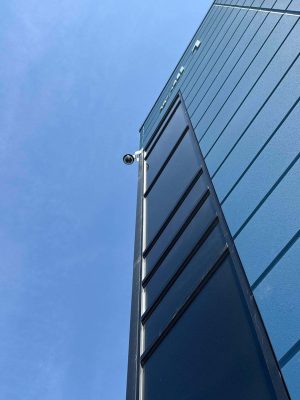
A bullet security surveillance camera mounted high on the corner of a modern commercial building, fully exposed to direct sun and open sky.
Placement matters more than most people think. Mount cameras under eaves or overhangs to shield them from direct sun, driving rain, and heavy snow. Angle them slightly downward so snow and water shed naturally rather than pooling on the lens. Keep recorders and switches in a climate-controlled indoor space whenever possible.
Maintenance seals the deal. Clean lenses and housings on a schedule, check seals before each season, and clear vents of dust and debris. Add an uninterruptible power supply so your security surveillance keeps recording through outages, and enable cloud or off-site backup so footage survives even if local hardware fails. Finally, test the system during mild weather so you discover problems before an emergency does.
Extreme weather is no longer rare, and treating your security surveillance as weatherproof “set and forget” equipment is a mistake. A heatwave or snowstorm can blind your cameras, corrupt your footage, and cut your power at the worst possible moment. By selecting rugged hardware, positioning it thoughtfully, and maintaining it through the seasons, you keep your property protected no matter what the forecast brings.
For help with any project or installation in the New Jersey or Philadelphia area please call us at 877-832-1206.
For more ideas please visit – https://www.bridgecable.com/services/
For more information and educational content please visit:
https://www.youtube.com/@BridgeCable
Copyright © 2026 Bridge Cable. All rights reserved.
Mailing: 2745 Terwood Road, Willow Grove, PA 19090
Warehouse: 2066 W. Hunting Park Ave, STE 308, Philadelphia, PA 19140
Related Posts
Fiber Optic Contractor Demand Soars This July
CCTV Contractor: CCTV vs AI Video Analytics in 2026