What Role Does Low Voltage Play in Speed Camera Systems?

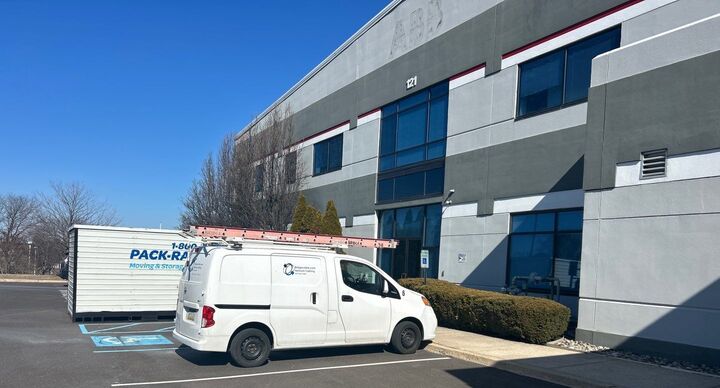
A Philadelphia Parking Authority enforcement officer logs a violation by hand near Chestnut Street — the same agency that now oversees automated speed camera systems on Roosevelt Boulevard and Broad Street.
Roosevelt Boulevard has carried a grim nickname for decades: the Boulevard of Death. Twelve lanes, dozens of intersections, and speeds that regularly blew past the posted limit made it one of the most dangerous corridors in Philadelphia. When the city and the Philadelphia Parking Authority (PPA) turned to automated enforcement to fix that, the headlines focused on fines and fairness.
What rarely gets mentioned is the quieter engineering story underneath every pole: speed camera systems on Roosevelt Boulevard and, now, Broad Street run on a foundation of low voltage infrastructure that most drivers never think about.
Why Roosevelt Boulevard and Broad Street Became Test Corridors?
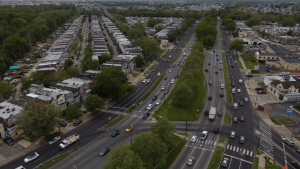
Roosevelt Boulevard’s twelve lanes and grassy median have earned it the nickname “Boulevard of Death” — the corridor where Philadelphia piloted its automated speed camera program in 2020.
Roosevelt Boulevard (Route 1) was Pennsylvania’s pilot corridor for automated speed enforcement, launching in 2020 with ten camera locations. The results were dramatic: speeding violations dropped roughly 93 to 95 percent, pedestrian-involved crashes fell by half, and fatal and serious injury crashes declined by more than 20 percent. Those numbers gave the city the case it needed to expand. In September 2025, the PPA activated speed camera systems along Broad Street (Route 611), where an analysis had found 206 fatal or serious injury crashes between 2020 and 2024. Fifteen locations and thirty-one cameras now watch that corridor as part of the city’s Vision Zero effort, with Route 13 in the Northeast following the same playbook.
What Is a Low Voltage Speed Camera System?
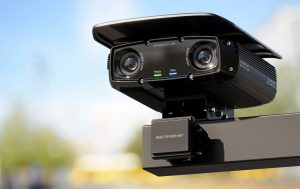
This multi-sensor LPR camera uses dual stereo-scope lenses and AI processing to capture accurate license plate data in real time.
A speed camera system isn’t a single device bolted to a pole — it’s a network. Each installation pairs a 3D tracking radar with a high-resolution still camera and a video camera, all coordinated to capture a speeding vehicle’s plate, timestamp, location, direction, and speed the instant it crosses the threshold. None of that hardware runs on standard electrical current. Cameras, radar units, communications modules, and lighting all operate on low voltage circuits, typically stepped down from AC power through dedicated transformers or powered directly over structured cabling. Speed camera systems depend on that low voltage layer for everything from image sensor timing to the microsecond synchronization between radar detection and shutter trigger.
The Low Voltage Components Behind the Cameras
Several pieces of low voltage infrastructure work together behind every enforcement pole on Roosevelt Boulevard and Broad Street:
Power delivery. Most roadside camera enclosures use Power over Ethernet (PoE) or low voltage DC power supplies to run cameras, radar, and heaters that keep lenses clear in winter. This keeps exposed wiring at safer voltages in a harsh, weather-exposed environment.
Data and communications cabling. Structured cabling — fiber optic or shielded copper — carries captured images and metadata from the pole to a secure processing hub, and eventually to Philadelphia Police Department reviewers who verify each violation before a ticket is issued.
Backup and surge protection. Low voltage battery backup and surge suppression keep speed camera systems operating through brief outages and protect sensitive radar and imaging components from voltage spikes common on major arterial roads.
Conduit and grounding. Proper low voltage conduit routing and grounding protect cabling from moisture, vibration from passing trucks, and electromagnetic interference that could otherwise corrupt a radar reading.
Wireless or cellular backhaul. Where running fiber to a pole isn’t practical, low voltage cellular modems transmit data back to the PPA’s system, letting speed camera systems go live on corridors without a full trench-and-conduit buildout.
Why Low Voltage Infrastructure Matters for Automated Speed Enforcement
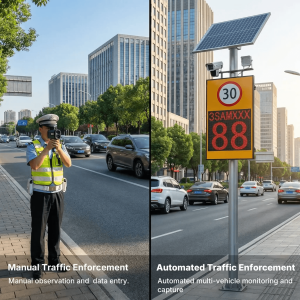
While an officer with a handheld radar gun can only clock one vehicle at a time, automated systems like the ones now running on Roosevelt Boulevard and Broad Street use low voltage radar, imaging, and solar power to track multiple vehicles around the clock.
The credibility of automated speed enforcement rests on accuracy. A ticket carries fines of $100 to $150 depending on how far over the limit a driver was traveling, and that citation has to hold up. If the low voltage power feeding a radar unit is unstable, or if data cabling introduces latency between detection and image capture, the entire chain of evidence weakens. That’s why agencies deploying speed camera systems lean so heavily on experienced low voltage contractors, not just camera vendors — the wiring, grounding, and backup power design are what keep a $150 citation defensible in court.
Results So Far
The numbers along Roosevelt Boulevard speak for themselves, and Broad Street is already showing similar early trends in reduced speeding violations. None of that happens without the low voltage backbone running quietly behind the scenes — the transformers, the cabling, the backup batteries, and the conduit that most residents will never see and few would think to ask about. Every reduction in violations logged by these speed camera systems is also, in a sense, a reliability report on the infrastructure that makes them possible.
What Cities Should Weigh When Expanding Speed Camera Systems
As Philadelphia extends automated enforcement to Route 13 and considers further corridors, planners need to weigh more than camera placement. Power redundancy at high-traffic intersections, cabling routes that survive winter freeze-thaw cycles, and cellular backhaul reliability all shape whether speed camera systems perform consistently or generate gaps in coverage. Coordination with the local utility and a low voltage design built for a 24/7 outdoor duty cycle matters just as much as the radar hardware itself.
Looking Ahead
Roosevelt Boulevard proved the concept, Broad Street scaled it, and Route 13 is extending it further into Northeast Philadelphia. As more corridors adopt speed camera systems, the unglamorous low voltage infrastructure behind each pole — power, data, backup, and grounding — will keep doing the work that makes automated enforcement both effective and defensible, long after the ribbon-cutting headlines fade.
For help with any project or installation in the New Jersey or Philadelphia area please call us at 877-832-1206.
For more ideas please visit – https://www.bridgecable.com/services/
For more information and educational content please visit:
https://www.youtube.com/@BridgeCable
Copyright © 2026 Bridge Cable. All rights reserved.
Mailing: 2745 Terwood Road, Willow Grove, PA 19090
Warehouse: 2066 W. Hunting Park Ave, STE 308, Philadelphia, PA 19140
Related Posts
Network Downtime Cost for Pennsylvania Businesses
How Weather Extremes Affect Your Security Surveillance