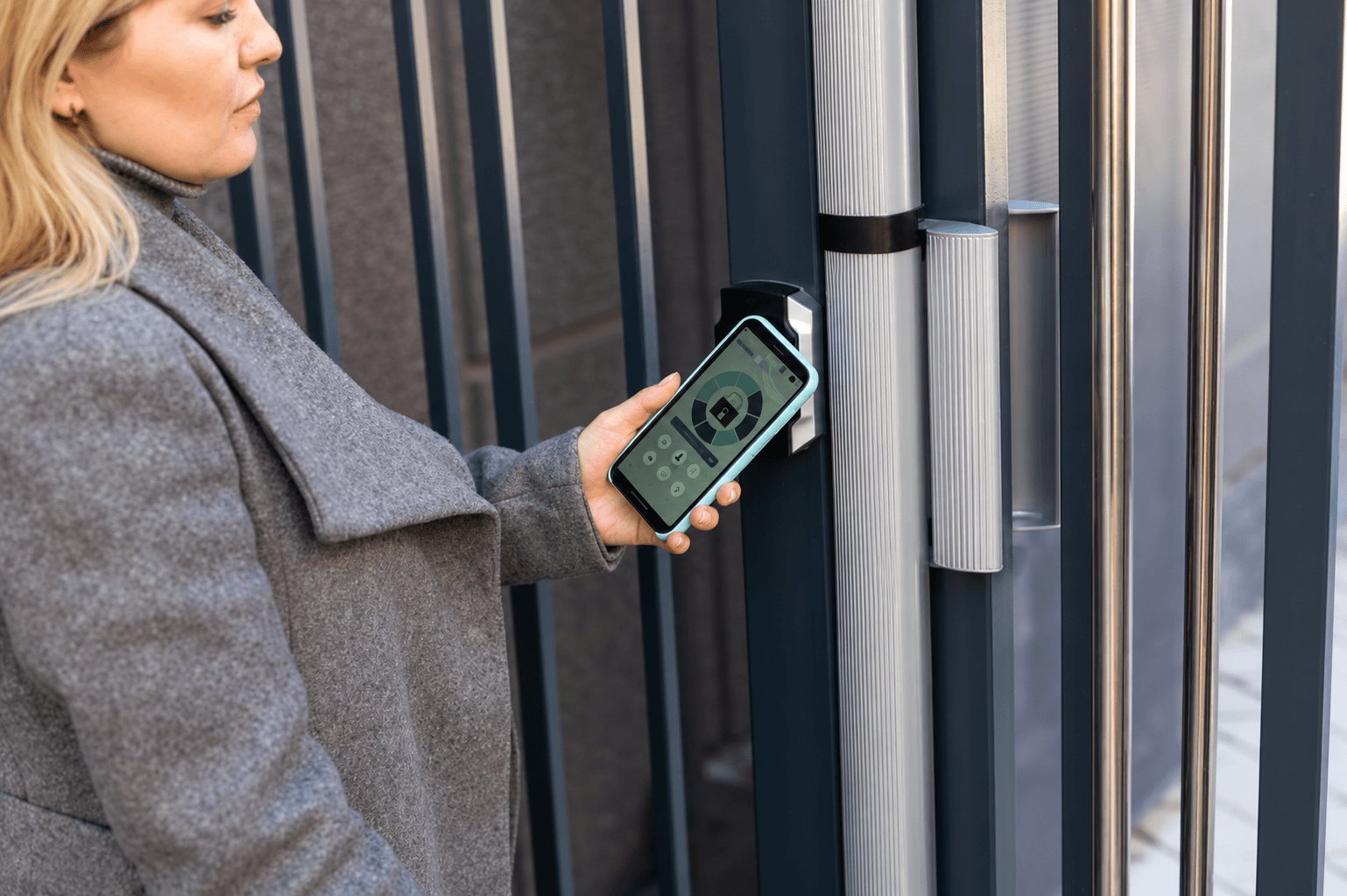
How Can An Access Control System Installation Stop Tailgating?

A sign and a chain tell people where they shouldn’t go, but they can’t stop anyone who decides to go anyway. A professional access control system installation turns “Employees Only” from a request into a rule that verifies every entry.
Most intrusions at commercial buildings don’t involve a crowbar. They involve a friendly smile, a held door, and an employee who didn’t want to seem rude. Tailgating, unmanaged visitors, and doors propped open for a quick smoke break create exactly the openings opportunistic intruders look for. The good news is that most of these gaps are fixable, and the fix usually starts with a thoughtful access control system installation paired with policies people actually follow.
Why Tailgating and Opportunistic Intrusion Keep Working
Opportunistic intruders rarely plan an elaborate attack. They test for easy wins: a side door that doesn’t latch, a lobby where nobody checks badges, a loading dock left open during deliveries. Tailgating works because it exploits courtesy. Holding the door is a social reflex, and challenging a stranger feels awkward. An access control system installation that ignores human behavior will leave those gaps open no matter how advanced the hardware is.
Step 1: Start With a Door-by-Door Risk Assessment
Before choosing hardware, walk every opening. Note which doors see heavy foot traffic, which lead to sensitive areas like server rooms or inventory storage, and which are rarely used but still unlocked. A professional commercial access control installation begins with this survey because it shows where to invest in stronger controls and where a basic reader and lock are enough. Pay close attention to secondary entrances such as employee side doors, stairwells, and roof hatches, since opportunistic intrusion tends to target the doors nobody is watching.
Step 2: Choose the Right Credentials
Key card access systems remain the backbone of most commercial buildings, but not all cards are equal. Older 125 kHz proximity cards can be copied with inexpensive tools, so upgrading to encrypted smart cards or mobile credentials closes a common gap. For high-security areas, consider multi-factor options that pair a card with a PIN or biometric read. During access control system installation, assign credentials by role and schedule so each person reaches only the spaces they need, only when they need them.
Step 3: Physically Stop Tailgating at the Entrance

One held door is all it takes. An employee holds the door, and someone without a badge follows him into a secure zone. This is the gap that a well-planned access control system installation is built to close.
Credentials verify who is allowed in, but they can’t stop a second person from walking in right behind the first. That’s where the entrance itself matters:
- Security turnstiles and optical barriers admit one person per valid credential and alarm when someone piggybacks.
- Security revolving doors and mantraps offer the strongest control for data centers, labs, and other high-risk spaces.
- Overhead anti-tailgating sensors count people passing through a standard door and flag when more people enter than credentials were presented.
- Door-held and door-forced alarms alert security when a door stays open too long or opens without a valid read.
Matching these tools to traffic volume is a core part of access control system installation. A busy lobby may justify turnstiles, while a low-traffic side door might only need a held-open alarm and a camera.
Step 4: Build a Real Visitor Management Process
Visitors are one of the most common blind spots in commercial security. A sign-in clipboard at the front desk tells you very little about who is actually in the building. A modern visitor management system pre-registers guests, verifies ID at check-in, issues a dated badge or temporary mobile credential, and notifies the host on arrival. Temporary credentials should expire automatically at the end of the visit. Tying visitor management into your access control system installation means guest access follows the same rules and leaves the same audit trail as employee access. Contractors and delivery drivers deserve extra attention: give them escorted or time-limited access to only the areas their work requires.
Step 5: Harden the Doors Nobody Watches
Opportunistic intrusion thrives on neglect. Check door closers, strikes, and latch alignment, because a door that doesn’t close fully is an open invitation. Add door position switches so the system always knows when an opening is ajar. Replace mechanical keys on perimeter doors with electronic locks; experienced keyless entry system installers can retrofit most existing frames without replacing the door. Pair critical doors with video so every alarm arrives with footage, and a thorough access control system installation will tie those alarms and cameras into one dashboard.
Step 6: Train People and Reinforce the Culture
Even the best access control system installation fails when doors get propped or badges get shared. Teach employees that it’s fine to politely ask to see a badge, or to walk an unfamiliar face to reception. Post clear signage at controlled entrances. Run periodic tailgating tests, and review audit logs for patterns like repeated door-held alarms at the same opening, which usually point to a habit worth addressing rather than a hardware fault.
Step 7: Maintain, Audit, and Update
Access control is not a one-time project. Deactivate credentials for departing employees the same day, review access levels every quarter, and keep controller and reader firmware current. Test door alarms and anti-tailgating sensors on a regular schedule, since a sensor that quietly stops reporting is worse than no sensor at all. Building ongoing service into your access control system installation plan keeps the system as strong in year five as it was on day one.
Why Local Expertise Matters
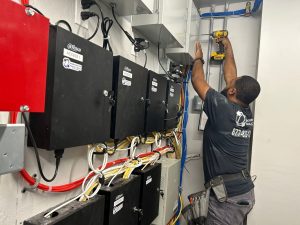
The work your visitors never see. Behind every card reader is a network of labeled controller panels and organized cabling. A clean access control system installation like this one makes troubleshooting, upgrades, and audits faster for years to come.
For businesses comparing access control systems Philadelphia property managers rely on, local experience counts. The region’s building stock ranges from converted rowhome offices to century-old warehouses, and each brings its own door, wiring, and egress challenges. A team handling commercial access control installation should coordinate early with the local authority having jurisdiction, confirm fire and life safety requirements for every locked opening, and plan the access control system installation around the building you actually have rather than an ideal floor plan.
Bringing It All Together
Stopping tailgating, managing visitors, and blocking opportunistic intrusion don’t require turning your building into a fortress. They require the right mix of credentials, entrance hardware, visitor processes, and everyday habits, all planned together. Start with an honest walk through every door, invest where the risk is highest, and treat access control system installation as the foundation of a security culture rather than a box to check. The result is a building that stays welcoming to the people who belong there and frustrating for everyone who doesn’t.
For help with any project or installation in the New Jersey or Philadelphia area please call us at 877-832-1206.
For more ideas please visit – https://www.bridgecable.com/services/
For more information and educational content please visit:
https://www.youtube.com/@BridgeCable
Copyright © 2026 Bridge Cable. All rights reserved.
Mailing: 2745 Terwood Road, Willow Grove, PA 19090
Warehouse: 2066 W. Hunting Park Ave, STE 308, Philadelphia, PA 19140
Related Posts

Access Control & Structured Cabling for Healthcare Facilities

What Is Hybrid Access Control and How Does It Work?