How Do You Choose a Fiber Optic Installation Contractor?
Every contractor promises fast service. It’s on the website, in the proposal, and in the first phone call. But “fast” can mean very different things: a crew that shows up tomorrow and leaves behind untested links, or a team that plans carefully, works efficiently, and hands you a network that runs for twenty years without a callback. Choosing the right partner for fiber optic installation comes down to knowing which kind of fast you’re actually buying.
Why the Contractor Matters More Than the Cable
Fiber itself is remarkably durable. Glass doesn’t corrode, it ignores electrical interference, and a well-built backbone can carry several generations of network equipment. What fails is workmanship: a connector that wasn’t cleaned, a cable bent too tightly around a tray corner, a splice that was never tested, or a label that doesn’t match the drawing. Those problems often stay hidden until traffic increases or a link drops in the middle of a busy day. In practice, the quality of your fiber optic installation is the quality of the people who did it.
What “Fast” Fiber Optic Installation Really Means
When contractors talk about speed, they usually mean one of five things. A good fiber optic installation company is fast in all of them, not just the one that looks best in a sales pitch.
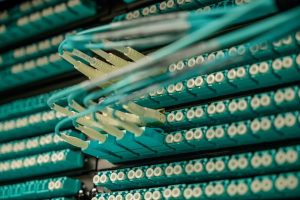
Hundreds of ports, and every one has to be clean, tested, and labeled. In a high-density patch panel like this, the quality of the fiber optic installation comes down to the crew that terminates and documents each connection.
Fast to respond. How quickly does someone return your call, schedule a site survey, and deliver a written proposal? A contractor who takes two weeks to send a quote rarely gets faster after the contract is signed.
Fast to start. Lead time depends on crew availability and materials. Specialty cable, armored outdoor runs, and pre-terminated assemblies can take longer to arrive, so an honest contractor will give you a real start date for your fiber optic installation instead of promising next week and then going quiet.
Fast on site. Efficient crews stage materials ahead of time, bring enough technicians and lift equipment for the job, and work in a logical sequence so pathways, pulling, termination, and testing don’t stall each other. Factory pre-terminated fiber can cut on-site labor considerably when the design allows it.
Fast to finish properly. The job isn’t done when the last cable is pulled. It’s done when every link is tested, certified, labeled, and documented. A fiber optic installation that skips this step may look finished sooner, but you’ll pay for that shortcut the first time you need to troubleshoot.
Fast to fix. After cutover, how quickly will the contractor answer an outage call? Ask for response times in writing, especially if your operations run around the clock.
When “Fast” Is a Red Flag
Speed that comes from cutting corners shows up later as downtime. Watch for proposals that leave testing out of the fiber optic installation scope, quotes far below every competitor’s, crews that terminate without inspecting connector end faces, or schedules that ignore permits, building access rules, and coordination with other trades. Real speed comes from planning, not from skipping steps.
How to Choose a Fiber Optic Installation Company
Check credentials. Look for BICSI-credentialed designers and installers, ideally including a Registered Communications Distribution Designer (RCDD). Manufacturer certifications matter too, since they often come with extended system warranties that cover both components and workmanship on a fiber optic installation.
Ask how they test. Every link should receive at least basic (Tier 1) certification with an optical loss test set, which measures insertion loss and length against industry standards. For backbones and critical links, ask about OTDR (Tier 2) testing, which maps each splice, connector, and bend along the run. Insist on receiving the full results, not just a summary.

Real speed comes from skill, not shortcuts. A Bridge Cable technician prepares a buffered fiber for an LC connector, with a stripper, cleaver, and cleaning supplies close at hand, because every clean, precise termination is what keeps a fiber optic installation from turning into a callback.
Review their documentation. Ask to see a sample closeout package from a past fiber optic installation. You should expect as-built drawings, a consistent labeling scheme, and test reports tied to each label.
Match experience to your building. Commercial fiber optic cabling in an occupied office tower is different from a warehouse with 40-foot ceilings, a hospital with infection control rules, or a campus that needs underground runs between buildings. Ask for references from projects like yours.
Confirm safety and insurance. Fiber work involves lifts, ladders, ceiling access, and sometimes trenching. Ask for proof of insurance and a written safety program before any fiber optic installation begins.
Get a detailed scope. A good proposal spells out strand counts, fiber types, pathways, termination methods, testing, documentation, and exclusions. Vague proposals lead to change orders, and change orders are one of the most common reasons a “fast” project runs late.
Questions to Ask Before You Sign
- Who will be on site, and are they your employees or subcontractors?
- What’s the realistic start date, and what could delay it?
- Will you work nights, weekends, or in phases to keep our operations running?
- How will you test and certify every link, and when will we receive results?
- What warranty comes with the fiber optic installation, and who backs it?
- What is your response time for service calls after the project is complete?
The answers will tell you more about a contractor’s speed than any promise on a website.
Why Local Experience Speeds Things Up
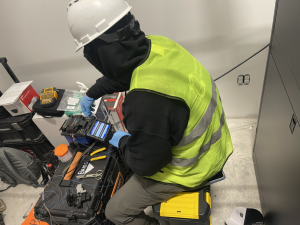
Fast on site looks like this: a fully stocked splicing station set up right where the work happens. A Bridge Cable technician fusion splices fiber with the cleaver, strippers, cleaning supplies, and label maker all within reach, so each splice is done right the first time.
Fiber optic installers Philadelphia businesses rely on bringing something out-of-town crews can’t: familiarity with the region’s building stock, permitting, and utility coordination. The area mixes century-old industrial buildings, converted rowhome offices, hospitals, universities, and new logistics parks, each with its own pathway and access challenges. A local team can walk your site sooner, respond to service calls faster, and anticipate the issues that slow down a fiber optic installation in older buildings. When you need fiber network installation services for future moves, adds, and changes, that local presence keeps the network documented and supported long after the first install.
Who We Are
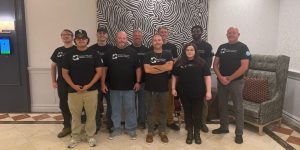
Meet the people behind the promise. Bridge Cable’s team brings the training, coordination, and accountability that make fast fiber optic installation something you can count on, from the first site walk to the final test report.
At Bridge Cable, fast means responsive, organized, and done right the first time. Bridge Cable’s team plans every fiber optic installation around your schedule, tests and certifies every link, and hands over complete documentation so your network is easy to support for years to come. To see how we got here, read our company history, or learn more about us and the work we do across the region. If you’re comparing contractors for an upcoming project, start by getting to know who we are.
Frequently Asked Questions
How long does a typical fiber optic installation take? It depends on scope. A single-building backbone often takes a few days to a few weeks of on-site work, while multi-building campus projects with trenching can take several weeks or more. Site surveys, design, and material lead times add to that.
Is the cheapest fiber optic installation company the best value? Rarely. A low bid that leaves out testing, documentation, or warranty coverage usually costs more over the life of the network through downtime and rework.
What should I receive when the project is complete? Certified test results for every link, as-built drawings, labels that match those drawings, and warranty paperwork. Together, they’re the proof that your fiber optic installation was done right.
Bringing It All Together
Fast service isn’t about who shows up first. It’s about who responds quickly, plans carefully, works efficiently, finishes with tested and documented links, and answers the phone when something goes wrong. Compare contractors on credentials, testing practices, documentation, and local experience, and ask direct questions about schedules and response times. The right fiber optic installation partner will give you a network that’s built fast and built to last.
For help with any project or installation in the New Jersey or Philadelphia area please call us at 877-832-1206.
For more ideas please visit – https://www.bridgecable.com/services/
For more information and educational content please visit:
https://www.youtube.com/@BridgeCable
Copyright © 2026 Bridge Cable. All rights reserved.
Mailing: 2745 Terwood Road, Willow Grove, PA 19090
Warehouse: 2066 W. Hunting Park Ave, STE 308, Philadelphia, PA 19140
Related Posts

Why Choose Fiber Optic Installation for Warehouse Network Cabling?

Fiber Optic Contractor: Why They Are Becoming the Standard in Pennsylvania